

Ceramic vs. Metallic (Foil) vs. Bead Catalytic Converters: What’s the Difference?
If you’re in the recycling business, you know that not all catalytic converters are the same. They come in three main types—ceramic, metallic (foil), and beaded—each with unique structures and recycling values. Here’s a simple breakdown of what makes each type different and why they’re valuable for recycling.
Ceramic Catalytic Converters
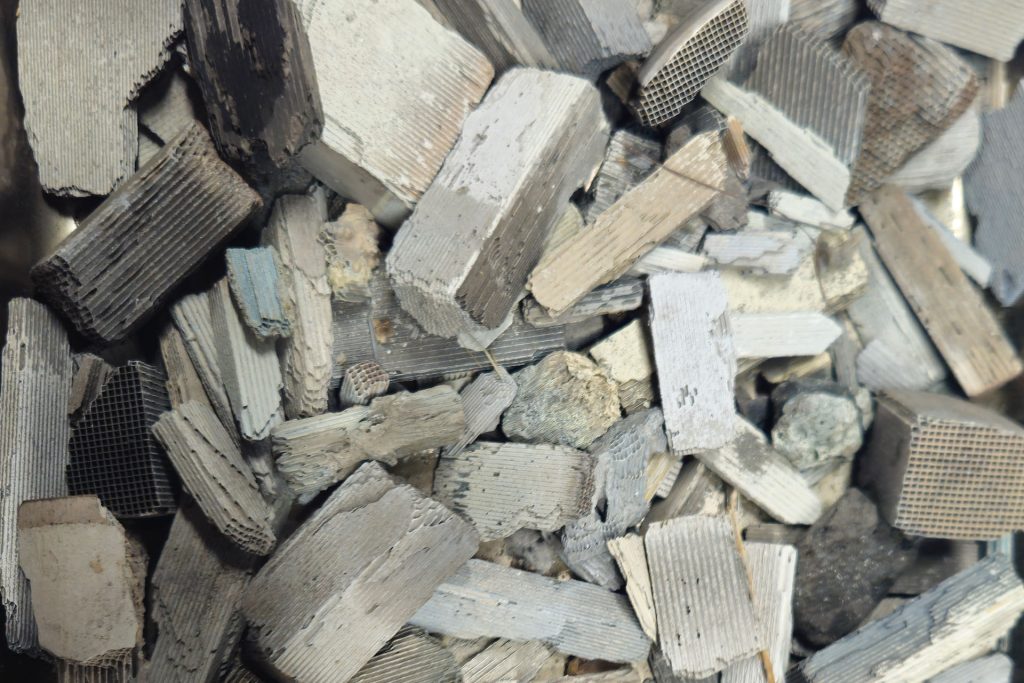
Ceramic catalytic converters are the most common and are found in most cars. They have a honeycomb structure made of ceramic and are coated with valuable metals like platinum, palladium, and rhodium. These metals help reduce pollution from the car’s exhaust.
How They Work: The ceramic honeycomb has many small cells, giving the exhaust gases more surface area to touch the metals. This setup makes it effective for cleaning up emissions.
- Pros:
- Heat-Resistant: Ceramic converters can handle high temperatures without melting.
- Good Metal Recovery: The honeycomb structure makes it easier to get valuable metals out of these converters.
- Cons:
- Fragile: Ceramic is easy to crack, so these converters might break if handled roughly.
- Found In: Most regular cars and trucks.
Metallic (Foil) Catalytic Converters

Metallic or foil catalytic converters use a metal (usually stainless steel) honeycomb instead of ceramic. They’re also coated with platinum, palladium, and rhodium, so they’re valuable for recycling. Metallic converters are more durable and allow exhaust gases to flow more easily.
How They Work: Like ceramic converters, metallic ones break down pollutants. The metal structure, however, makes them tougher and lighter.
- Pros:
- Durable: Metallic converters can handle higher temperatures and stress.
- Better Flow: The metal structure improves exhaust flow, which can help boost vehicle performance.
- Cons:
- More Complicated: The metal design can make it a bit more complex to extract the metals.
- Found In: High-performance cars, sports cars, and trucks that need a strong, durable converter.
Bead Catalytic Converters

Bead catalytic converters are an older style and are rarely found in modern vehicles. Instead of a honeycomb, they have small ceramic or metal beads coated in precious metals. These beads help reduce pollution but are less efficient than the newer honeycomb designs.
How They Work: Exhaust gases flow through the beads, touching the precious metals and reducing pollutants. However, the loose beads can move around and lose efficiency over time.
- Pros:
- Lots of Surface Area: The beads provide good contact with exhaust gases for pollution control.
- Useful in Older Cars: Beaded converters are mostly found in older vehicles.
- Cons:
- Less Durable: The beads can shift or fall out, reducing the converter’s performance.
- More Maintenance: Beaded converters may need replacing more often than newer types.
- Found In: Older vehicles or specific applications where this type is still in use.
Why Recycling Catalytic Converters Matters
Each type of catalytic converter—ceramic, metallic, and beaded—contains precious metals that can be recovered and reused. Here’s why recycling these converters is good for both the environment and your business:
- Protects the Environment: Recycling helps reduce the need for new mining, which conserves resources and reduces environmental impact.
- Economic Value: Recycled precious metals can be sold or reused, adding value to your recycling efforts.
- Supports a Sustainable Industry: Recycling keeps valuable materials in circulation and makes the industry more sustainable.
In Summary
Ceramic, metallic (foil), and beaded catalytic converters each have their own features. Ceramic converters are the most common, metallic converters are durable and ideal for heavy-duty vehicles, and beaded converters, while older, still contain valuable metals for recycling.
Working with RAS means you’ll get fair prices for each type of converter. Whether it’s ceramic, metallic, or beaded, RAS makes it easy to recycle these converters, get great returns, and contribute to a cleaner, greener industry. RAS is a major player in the automotive recycling industry and is a partner with industry organizations like REMA and URG.


